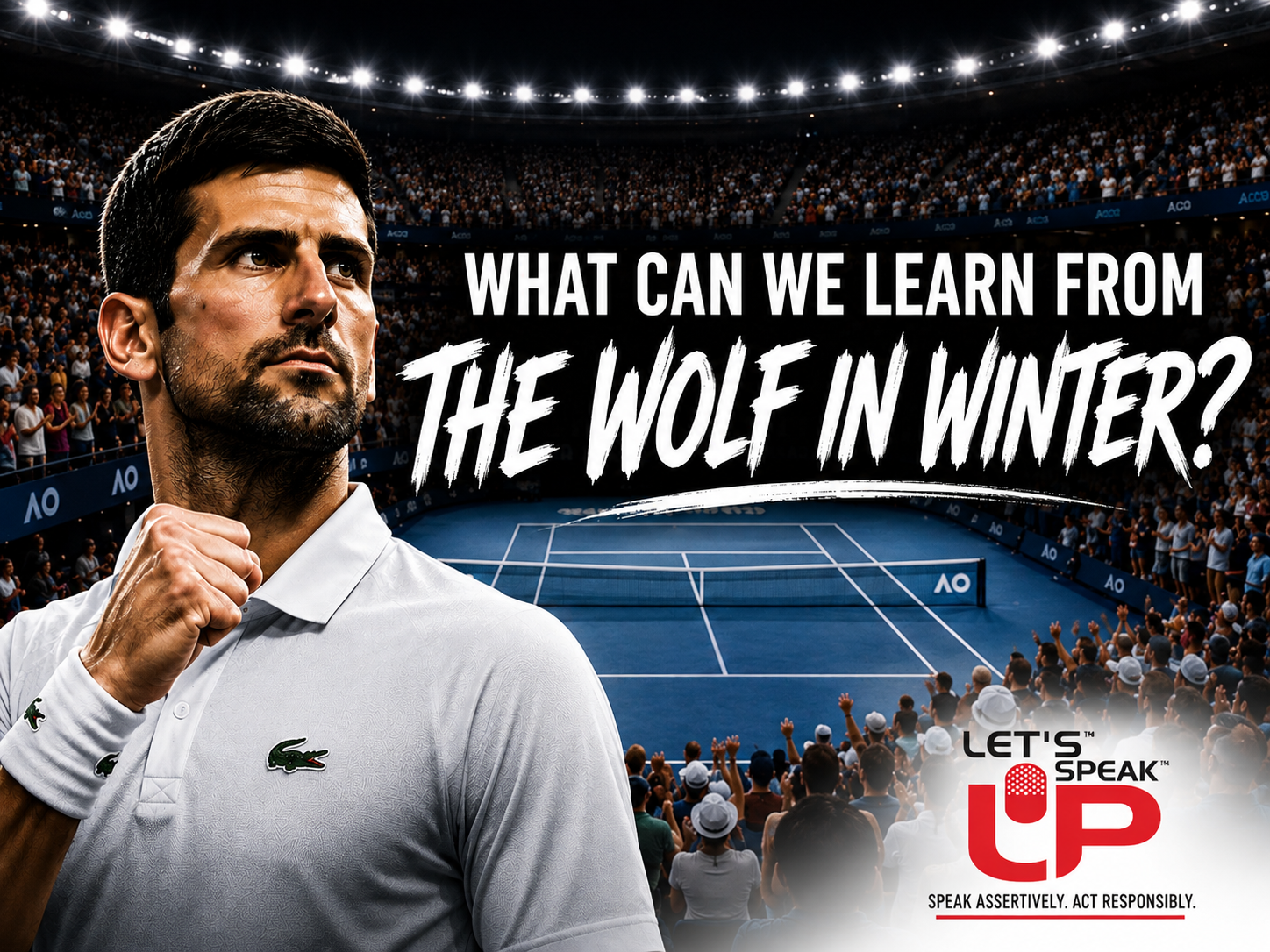

NOVAK DJOKOVIC: THE WOLF IN WINTER | WHEN THE WORLD TESTED HIS CHARACTER, HE REFUSED TO SURRENDER
It takes little courage to stand by your convictions when the crowd applauds. Character is tested when the crowd turns against you. How many people can stand firmly when nearly everyone around them yields to pressure?
That is what makes Novak Djokovic’s story so compelling. He was a man with far more to lose than to gain by standing firm. His career, reputation, championships, endorsements, and legacy were potentially at stake.
Yet he stood by his decision and accepted the consequences.
On August 20, the new documentary Novak Djokovic: The Wolf in Winter opens a window into one of the most controversial chapters of Djokovic’s life, taking viewers behind the headlines and into his experience surrounding the 2022 Australian Open.
We remember the spectacle.
The world’s number one tennis player arriving in Australia. The controversy over his vaccination status. The detention. The legal battles. The relentless international headlines. The cancellation of his visa. And finally, his deportation.
But behind that global spectacle was a human being under an extraordinary spotlight, facing enormous pressure to surrender a deeply held personal decision.
Djokovic now tells the story from his perspective, including the personal toll of being vilified in parts of the media and public discourse while confronting what he viewed as an extraordinary exercise of governmental power.
And that may be where the more important story begins.
COURAGE UNDER THE SPOTLIGHT
In 2022, Novak Djokovic was not simply competing for another tennis championship.
He found himself in a far more consequential contest involving personal choice, conviction, conformity, and consequences.
He arrived in Australia as one of the greatest athletes in the world. Within days, however, the spotlight shifted from his extraordinary athletic achievements to his decision not to receive the COVID 19 vaccine.
He was detained. His visa was cancelled. He was deported.
Yet perhaps the most remarkable part of Djokovic’s story is not simply what happened to him.
It is how he responded to what happened to him.
Courage becomes considerably harder when millions of people are watching.
Djokovic knew his decision could cost him tournaments, rankings, endorsements, public approval, and potentially his place in tennis history.
Still, he refused to abandon a deeply held personal decision simply because surrendering it would have made his life easier.
Whatever one’s position on vaccination, that distinction matters.
We can disagree with another person’s decision while still recognizing the courage required to stand by it and accept the consequences. Djokovic had enormous incentives to change course.
He chose not to.
That is where his story becomes larger than the vaccine debate.
Because each of us eventually confronts some version of that choice.
On college campuses. In workplaces. Within institutions. Among friends and families.
Do we have the courage to question, dissent, or stand by our convictions when doing so may cost us acceptance, opportunity, status, or belonging?
PERSEVERANCE AFTER PUBLIC REJECTION
Djokovic could have allowed the Australian episode to define him. He didn’t. He returned to the court. He continued training. He continued competing. He continued winning.
Then, remarkably, he returned to Australia and won the 2023 Australian Open, reclaiming the championship on the very stage from which he had been excluded a year earlier.
There is something profoundly symbolic about that return. He returned carrying a tennis racket. He answered adversity by recommitting himself to his purpose, discipline, and performance.
That is perseverance.
Perseverance is not merely surviving hardship. It is refusing to allow hardship to determine who you become afterward.
RESENTMENT IS NOT ACCOUNTABILITY
The Wolf in Winter revisits the trauma and injustice Djokovic believes he experienced during that period. But revisiting the past does not require living in resentment.
That distinction matters.
Forgiveness does not require pretending that everything that happened was right. Moving forward does not erase our responsibility to examine what happened. And perseverance does not mean governments or institutions should escape scrutiny for their decisions.
A healthy society must be capable of looking back at extraordinary periods of fear, uncertainty, and social pressure and asking difficult questions:
- How did we respond to fear, coercion, and pressure to conform?
- How did we treat people who dissented?
- Were the actions taken proportionate to the circumstances?
- What can we learn before the next crisis arrives?
- What would we do differently next time?
Those questions extend far beyond Novak Djokovic.
THE REAL TEST OF COURAGE
Djokovic’s experience leaves us with a powerful leadership lesson.
Courage is not about proving everyone else wrong.
It is about knowing what you believe, understanding what standing for it may cost you, making an informed choice, and accepting responsibility for that choice.
Then comes perseverance.
Novak Djokovic stood beneath one of the brightest spotlights in the world.
He was detained. He was deported. He faced extraordinary criticism.
But he kept playing. He kept competing. He kept doing what he loved.
And eventually, he walked back onto that same Australian stage and lifted the trophy again.
You may not control the spotlight placed upon you. You may not control the narrative others construct around you. You may not even control every consequence imposed upon you. But you can control how you respond to pressure, adversity, rejection, or coercion. LEAPPing again requires focus on your purpose, courage to act, and fortitude to rise again.
A PATH TO COURAGE: LEAPP™
Djokovic’s story demonstrates courage under extraordinary pressure. But courage does not always come naturally.
Simply telling someone to “be courageous” does not prepare that person to evaluate the risks, withstand the pressure, or live with the consequences.
That is why we developed LEAPP™:
L | LEARN: Learn and identify the most effective possible solutions.
E | EVALUATE: Evaluate the potential best and worst case scenarios for each option.
A | ASSESS: Assess the resources available to mitigate risks and potential losses.
P | PRIORITIZE & PLAN: Prioritize options from safest to most assertive, then plan your response using the 5 RIGHTS Action framework.
P | PLEDGE: Pledge to accept responsibility for your decision and its outcomes.
Courage is not an arbitrary term. Responsible courage requires preparation, discernment, an understanding of risk, and a willingness to accept consequences.
That is the deeper lesson I take from Novak Djokovic’s Australian story.
- Courage withstands pressure.
- Principles guide your choices.
- Perseverance carries you through consequences.
- Character determines how you forge ahead.
Perhaps Djokovic’s most enduring victory was not the trophy he eventually lifted. It was his determination to remain his own champion when the world was demanding that he become someone else.
Learn how to apply the Let’s Speak Up™ LEAPPP™ Tool to build courage, confidence, and responsible action.
LEAD with ONE™ Purpose. Speak Assertively. Act Responsibly.